
Overflow and wash lines on siding
Overflow often points to undersized gutters, poor pitch, clogged sections, or too few outlets. A new layout can move water where you want it to go.
Serving Rochester, New York & surrounding areas
Calls answered around the clock

Gutter installation · Rochester, New York
Describe your home and roofline once, and we'll connect you with a local contractor who installs gutters in the Rochester area.
CALL NOW: 585-566-1477Gutter installation scope
If you're searching for gutter installation Rochester homeowners can rely on for controlled runoff, the details matter more than the brand of gutter. A good installation is about capturing roof water, moving it along the fascia without overflow, and sending it down a planned path that protects siding, trim, and the foundation.
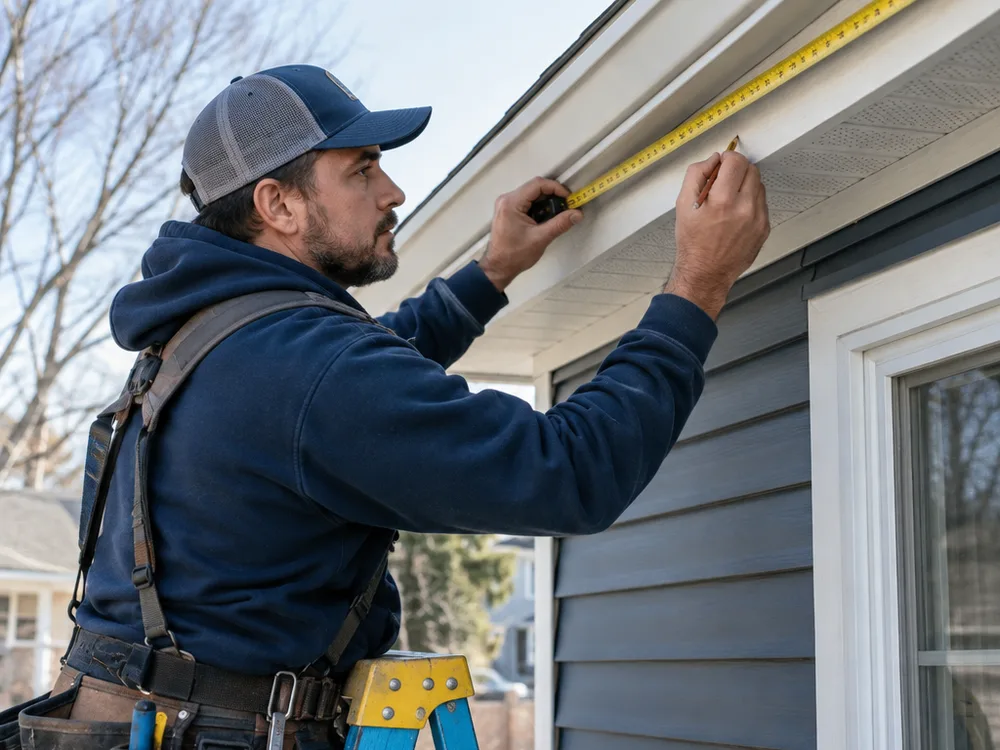
Most gutter installation work in Rochester NY starts with a quick evaluation of the roof edge and drainage layout:
Homeowners typically choose between seamless aluminum, copper, or steel. Seamless aluminum is formed on-site to the home's measurements, which reduces joints along long runs.
A contractor may also talk through gutter size and whether gutter guards make sense for your roof. Guards can reduce routine cleaning, but the right style depends on the roof edge, shingle condition, and how debris tends to behave around your home.
Rochester's snow and ice are also part of the planning. Correct pitch, strong hangers, and thoughtful downspout placement help limit winter problems like ice buildup at the eaves or water spilling behind the gutter during a thaw.
Rochester Siding connects homeowners with local contractors for gutter installation. You explain what's happening once, then speak directly with the contractor about layout options and what they recommend for your house.
Roofline drainage concerns
Overflow often points to undersized gutters, poor pitch, clogged sections, or too few outlets. A new layout can move water where you want it to go.
If water is getting behind the gutter, the roof edge details matter. The installer will look at drip edge, fascia condition, and where the back of the gutter sits.
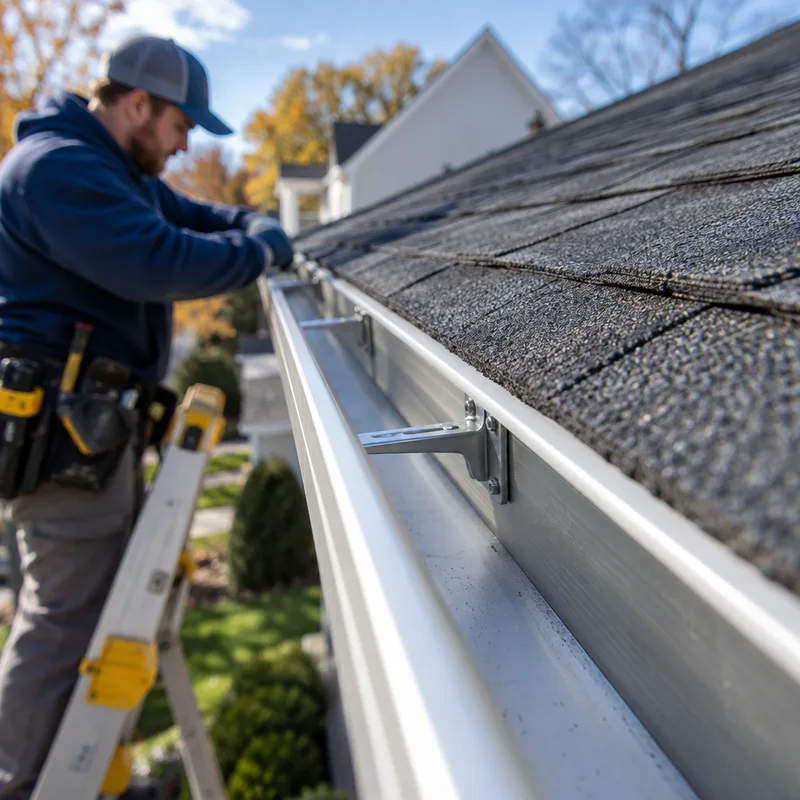
Loose hangers, rotted fascia, or long spans without enough support can cause sagging. Correct spacing and solid fastening are part of a durable install.
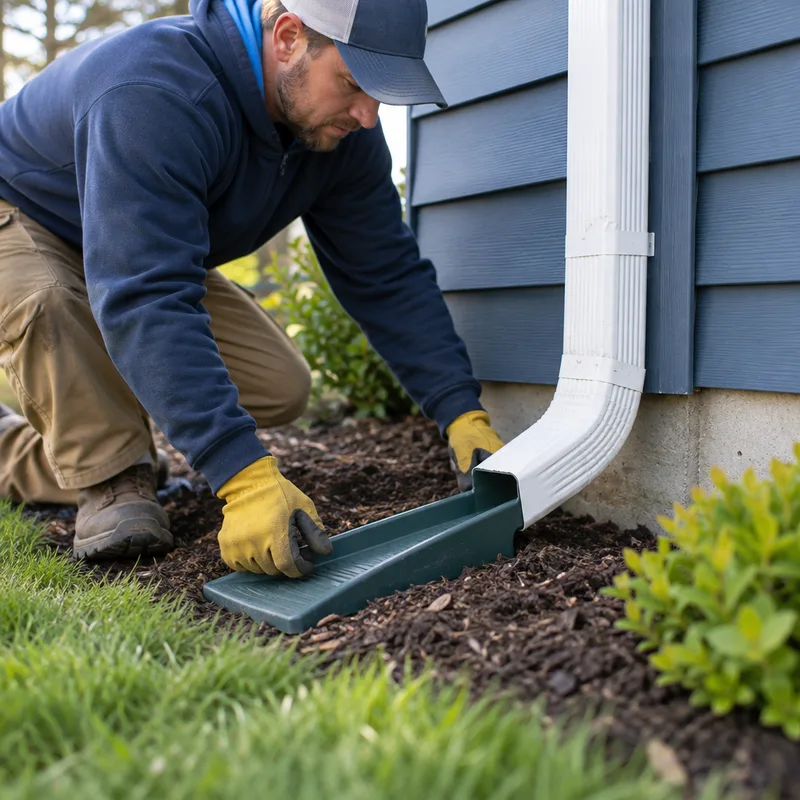
Even good gutters can cause trouble if downspouts empty next to a walkway, stair, or foundation area. Rerouting is often part of the job.
Freeze-thaw cycles can expose pitch problems and weak attachment points. A contractor can plan runs and outlets with winter conditions in mind.
From call to flow check
Quick phone details
Tell us what you're seeing—overflow, staining, sagging, or missing sections—how many stories, and whether you have problem corners or tricky downspout areas.
Local connection
We match your details to an independent contractor who handles gutter installation work in the Rochester area, then you talk through options directly.
On-site evaluation
The contractor confirms run lengths, corners, outlet locations, and downspout discharge areas, and checks fascia and roof edge details that affect how the system will hang.
Installation
Old components may be removed if needed, new gutters are set to pitch, downspouts are routed, and the contractor verifies water moves to the intended discharge points.
If you're unsure whether you need new gutters or a better layout, describe the trouble spots once and get connected with a local contractor who installs gutters for homes like yours.
CALL NOW: 585-566-1477Installation details

Common questions
If gutters are structurally sound but overflow or hold standing water, the issue is often pitch, outlet placement, or recurring clogs rather than the metal itself. When you talk with the contractor, mention where overflow happens—valleys, corners, or long straight runs—and whether water spills in heavy rain or even during light rain.
A clear description of the home's height, the sides that need gutters, and any problem areas is enough to start. It also helps to note where downspouts currently discharge and whether there are spots you want to avoid, like steps, walkways, driveway edges, or areas where water pools.
Seamless aluminum gutters reduce joints along long runs, which means fewer seam locations to maintain. Sectional systems can still work when installed well, but they have more joints and rely more heavily on proper sealing and alignment at each section.
Many homes use 5-inch K-style gutters, with 6-inch systems used when roof areas are larger, steeper, or collect water quickly in valleys. The contractor will base the recommendation on roof geometry and where water concentrates rather than guessing from the front of the house.
Gutters need solid backing, so fascia condition is part of the evaluation. If there is rot or loose boards, the contractor will usually discuss addressing that first so the hangers and fasteners have a stable surface.
Gutter guards can be added during installation, but the best style depends on the roof edge, shingle condition, and how debris behaves around your property. When you talk with the contractor, mention nearby trees and whether past clogs were from leaves, needles, or roof grit.
You describe the job once, and we connect you with a local contractor who handles gutter installation in the Rochester area. You get details and recommendations directly from the contractor and decide whether to move forward.
One call starts the conversation
Call and describe your roofline, where water is spilling, and where you want downspouts to discharge. We'll connect you with a local contractor who can take it from there.
CALL NOW: 585-566-1477